Top 10 Soft Glasses Pouch Types for Global Buyers
Choosing the right Soft Glasses Pouch involves more than comparing colors, prices, and logo options. Global buyers must examine protection, material quality, production consistency, and shipping practicality. A pouch may look elegant on a product page, yet fail beside sharp sunglass frames or metal hinges.
Elena Marquez, an eyewear-packaging consultant with experience in retail and promotional packaging, explains: “A reliable pouch should protect the lenses, support the brand, and remain useful after purchase.” That practical view guides this overview of the Top 10 Soft Glasses Pouch Types for Global Buyers. Each type offers different strengths, from microfiber drawstring designs to padded zipper cases and recycled fabric options. The details matter. A smooth lining can reduce scratches. A firm seam can prevent early tearing. A wider opening can fit oversized frames without forcing the fabric.
Small choices create visible results. Buyers should compare fabric weight, closure security, stitching, print durability, and packing volume. They should also consider climate, warehouse handling, and customer habits across different markets. Cotton may feel natural, but it can absorb moisture. Synthetic microfiber often cleans lenses better, though its environmental profile deserves closer review. Recycled materials sound attractive, but certification and traceability still require verification.
No single pouch wins every market. That assumption needs reconsideration. Some buyers prioritize low landed cost, while others value premium presentation or reduced packaging waste. Sampling remains essential. Test the pouch with real frames, repeated opening, and ordinary transport conditions before placing a large order. This guide highlights useful options, practical limitations, and overlooked details, helping global buyers make more confident sourcing decisions.
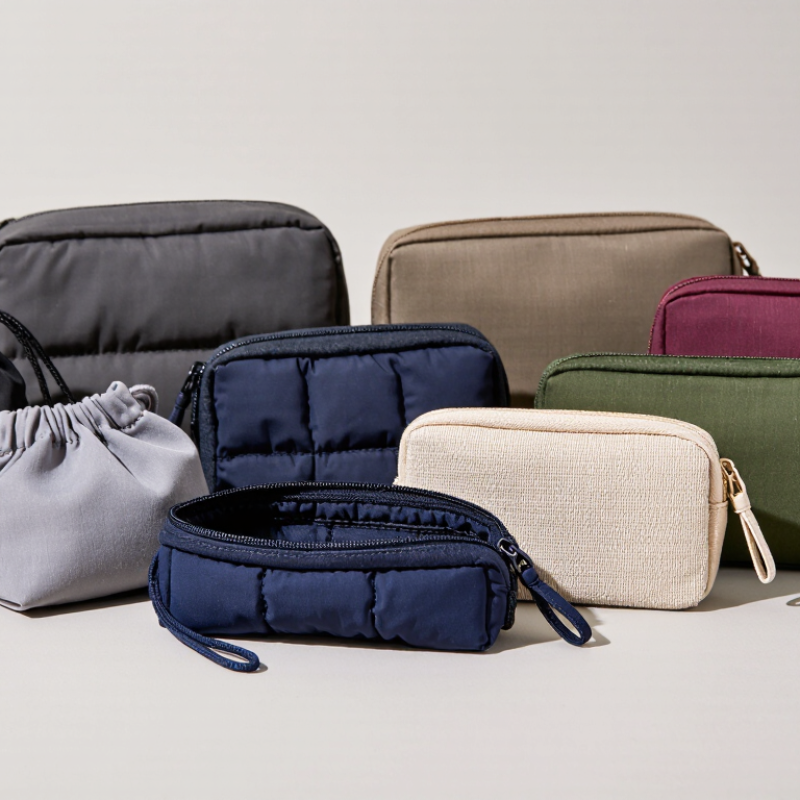
Microfiber Sleeves & Cotton Drawstring Pouches: 200–300 GSM [OEKO-TEX]
Microfiber sleeves and cotton drawstring pouches remain practical choices for global eyewear buyers. Their 200–300 GSM range balances protection, handling, and shipping weight. Microfiber offers a smooth surface that helps reduce light dust and minor scuffing during storage. Cotton feels more natural and provides a firmer pouch structure. Both options can support customized sizing, colors, cord choices, and printed care information.
200 GSM
A 200 GSM pouch is usually lighter and easier to pack in large quantities.
300 GSM
A 300 GSM pouch feels denser and may suit premium eyewear or repeated retail handling.
Heavier is not always better. Excess fabric can increase freight costs and slow drying after washing. In sampling, check the sleeve opening, seam strength, cord movement, and actual finished weight. Small differences matter.
OEKO-TEX requirements should be verified through current documentation, not only supplier statements. Confirm the certificate scope, material composition, production site, and validity period.
Fabric testing should also consider color fastness, shrinkage, odor, and fiber shedding.
I once found a well-stitched pouch with uneven dimensions after washing. That mistake changed the inspection checklist.
Buyers should request pre-production samples and test them with real eyewear cases. A reliable pouch protects the product, looks consistent, and performs predictably across different climates.
Velvet Drawstring & Canvas Zipper Pouches: 8–12 oz Fabric [ASTM D3776]
Top 10 Soft Glasses Pouch Types for Global Buyers
Velvet drawstring pouches offer a soft, protective feel for glasses and small accessories. Their dense surface helps reduce light scratches during storage and shipment. A smooth cord should close easily without pulling the fabric out of shape. Check the inner dimensions carefully, because thick eyewear frames need extra room. A pouch that looks generous may still feel tight at the opening.
Canvas zipper pouches provide more structure and faster access. Their woven body suits retail displays, travel kits, and repeated handling. For many purchasing programs, 8–12 oz canvas offers a practical balance between durability and shipping weight. Confirm whether the quoted weight means ounces per square yard. Suppliers should test fabric mass using ASTM D3776 procedures and report the test method clearly. Results can vary with sampling location, moisture, and finishing treatments.
Construction details matter as much as fabric weight. Review zipper smoothness, seam allowance, cord strength, and edge binding before approval. A zipper pouch may need reinforced corners when packed with heavier eyewear cases. A velvet pouch can show pressure marks after compression, so request packed samples. One sample is not enough. Pre-production checks often reveal uneven stitching or inconsistent color. Even ASTM D3776 compliance does not guarantee pouch performance, which is an easy point to overlook. Clear tolerances and inspection records make international sourcing more dependable.
PU-Leather Snap & Silicone Pouches: AQL 2.5 Quality Control [ISO 2859-1]
Top 10 Soft Glasses Pouch Types for Global Buyers
PU-leather snap pouches offer a polished feel, firm structure, and easy opening. Their metal snaps should close evenly without sharp edges or loose plating. Silicone pouches suit buyers seeking flexibility, water resistance, and simple cleaning. They should feel smooth, not sticky, brittle, or strongly odorous. In practical sourcing, I check the pouch beside an approved sample. Small differences in color and softness are easy to miss online.
AQL 2.5 quality control
should follow ISO 2859-1 sampling procedures. Buyers and suppliers must confirm the lot size, inspection level, and defect classifications. Critical defects should normally have zero acceptance, while major and minor defects require agreed limits. AQL 2.5 does not mean every 2.5% of goods may be defective. It defines a sampling risk, not perfection. That distinction is often overlooked.
Tips:
Ask for measurements, material thickness, snap-cycle testing, and odor checks before mass production. Inspect seams, corners, lining, and logo-free surfaces under bright light. Keep photos of rejected defects for future reference. Silicone can attract dust during packing, while PU leather may crease in transit. These details deserve a final check. A sample can pass, yet production may still vary.
RPET & Felt Pouches: GRS Certification Requires ≥20% Recycled Content
Top 10 Soft Glasses Pouch Types for Global Buyers
RPET and felt pouches deserve careful material verification. The Global Recycled Standard requires at least 20% recycled content in certified products. It also checks chain of custody, processing, social practices, and chemical controls. A pouch may look sustainable yet fail an audit without valid transaction records.
Textile Exchange’s Materials Market Report 2024 estimated recycled polyester represented about 12% of polyester production in 2023. This figure shows both progress and a clear sourcing gap. RPET pouches usually use recycled plastic bottles, while felt pouches may combine recycled polyester fibers with virgin fibers. The exact percentage matters. A 20% claim is not the same as 80%. Buyers should request fiber composition, scope certificates, and shipment-level transaction certificates. Small details decide credibility.
Tips: Ask for the GRS certificate before approving samples. Check whether the certificate covers the actual factory and product scope. Request a material breakdown, not only the phrase “eco-friendly.” Color, thickness, stitching, and zipper quality also affect pouch durability. In practice, recycled felt can shed fibers around raw edges. That issue is easy to overlook. A pre-production wash test and abrasion check may reveal it early. Carbon claims also need caution; recycled content alone does not prove a lower total footprint. Use verified data, and leave room for honest improvement.
Top 10 Soft Glasses Pouch Types for Global Buyers
RPET and felt pouch categories compared against key GRS recycled-content thresholds.
Under the Global Recycled Standard (GRS), products generally require at least 20% recycled content to enter certification. A minimum of 50% recycled content is commonly required for finished-product GRS labeling. These thresholds apply across the pouch types shown and are not company-specific performance data.