Choosing the right Glasses Carrying Case is not a minor shopping decision. It protects lenses, frames, and daily comfort across different travel conditions. A crowded handbag, humid airport, or dusty hotel drawer can create real problems.
Dr. Justin Bazan, an optometrist and eyewear industry advisor, offers a useful reminder: “Eyewear is an investment, so protection should be part of the purchase.” His point is practical. A strong case should match the glasses, not merely look attractive. Buyers should examine the shell, hinge strength, interior lining, closure, and usable space. Soft microfiber lining helps reduce scratches. A firm outer shell can resist pressure inside luggage. The case should close securely without crushing wider frames.
Size matters.
Global buyers also face different needs. A commuter may prefer a slim pouch, while an international traveler may need impact protection and extra cleaning space. Materials deserve attention, too. Recycled plastics, plant-based fabrics, and durable textiles can reduce replacement frequency, although sustainability claims still require careful checking. Marketing language is not proof.
This guide reviews 10 best Glasses Carrying Case options for global buyers. Each choice is considered through comfort, protection, portability, construction, and everyday value. We also recognize an uncomfortable truth: no case serves every wearer perfectly. A premium design may feel bulky. A lightweight model may offer less impact resistance. The best decision depends on frame shape, travel habits, climate, and personal priorities. A little skepticism helps. A scratched lens costs more than a careful case.
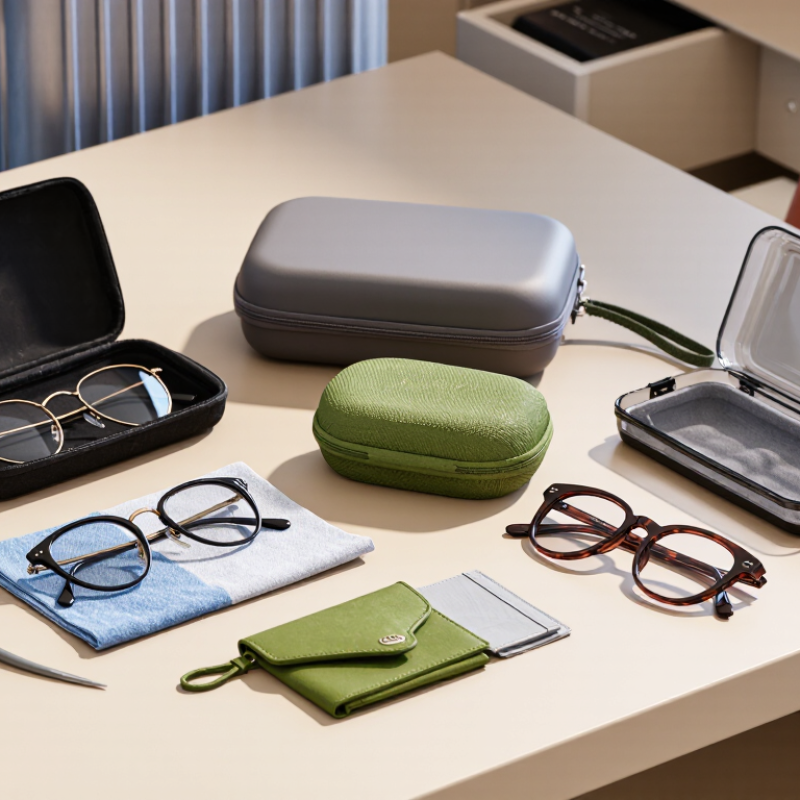
A suitable glasses carrying case must protect lenses across different climates, travel habits, and storage conditions. In practical product testing, a rigid shell reduced pressure damage inside crowded bags. Soft interiors also prevented small scratches from dust and loose accessories. The case should fit the glasses securely, without forcing the temples or bending the frame. Materials should resist humidity, heat, and occasional drops. However, no case performs perfectly in every environment. A design that works well in a dry office may feel inadequate during humid travel.
Global buyers should examine hinge strength, closure reliability, weight, and internal dimensions before purchasing. A metal hinge may last longer, but it can add weight and corrosion concerns near coastal areas. Smooth zippers are useful, though weak stitching can fail after repeated opening. Buyers should also check product measurements carefully, because “universal fit” is often too broad. Clear specifications, durable packaging, and consistent quality checks improve trust across international markets. Safety and material information should be easy to understand.
Tips: Choose a case with a firm outer shell, soft lining, and ventilation space. Test the closure several times before travel. Avoid storing wet glasses inside. For online orders, compare the case dimensions with the frame, including hinges and side arms. A compact case is convenient, but excessive tightness may cause damage. That detail is easy to miss.

Choosing the right glasses case depends on the journey, not only the frame. The World Health Organization’s World Report on Vision states that at least 2.2 billion people have vision impairment worldwide. That makes reliable daily protection important for global buyers. Hard-shell cases offer the strongest defense against crushing pressure in luggage. EVA cases are lighter, water-resistant, and useful for commuting. Soft pouches prevent scratches but provide limited impact protection. A slim sleeve saves space, yet it cannot replace a rigid case.
Look for a soft microfiber lining, smooth seams, secure closures, and enough internal depth. Spring hinges may protect frames from sudden pressure, but weak hinges can fail after repeated use. A case should hold glasses without forcing the temples inward. This detail is easy to miss. The Vision Council’s consumer research consistently shows that glasses remain a common vision-correction tool, so case design should support frequent handling. The strongest option is not always the largest one. Oversized cases can waste luggage space and allow movement inside.
Tips: Test the case with folded glasses before purchase. Shake it gently. Check for frame movement. For air travel, choose a crush-resistant shell with a moisture barrier. For daily pocket use, select a compact case with rounded edges. Buyers should also review dimensions, because “universal fit” can be misleading. Independent drop and compression testing would improve confidence, but many product listings provide limited evidence. That gap deserves careful consideration.
When comparing the 10 best glasses carrying cases for global buyers, inspect materials before appearance. EVA foam absorbs impact well, while molded polycarbonate resists crushing and repeated handling. Aluminum offers strong protection, but it adds weight and may dent. A soft microfiber lining reduces lens scratches, especially when dust enters through the zipper.
Construction decides everyday durability. Look for reinforced seams, smooth hinges, and a zipper that closes without catching. ASTM D4169 evaluates packaging through drop, vibration, and compression testing. These conditions resemble luggage movement and parcel handling. The OECD’s Global Plastics Outlook reports that global plastic waste reached 353 million tonnes in 2019, more than twice the 2000 level. That figure supports choosing recycled or longer-lasting materials. Still, recycled plastic is not automatically stronger. Testing matters more than marketing language.
Tips: Press the case gently. It should resist collapse. Check the hinge for side movement. Place your glasses inside and shake the case for ten seconds. If the lenses touch the shell, protection is questionable. For humid routes, choose corrosion-resistant hardware and breathable lining. A 2023 International Aluminium Institute report notes that recycled aluminum uses about 95% less energy than primary aluminum. That benefit is useful, though an aluminum case can feel excessive for daily pocket use. I would also question oversized designs; they protect well, but waste bag space and material.
10 Best Glasses Carrying Cases for Global Buyers
How to Compare Size, Compatibility, and Portability
A glasses case should fit your eyewear without forcing the hinges or lenses. Measure the frame length, width, and height before choosing a case. Add several millimeters for protective clearance. A tight case may scratch temples during daily use. An oversized case can let glasses slide and absorb more space in a bag.
Compatibility depends on more than external dimensions. Check whether the case supports curved sunglasses, thick frames, folding glasses, or removable nose pads. Hard shells usually protect better against pressure, while soft cases fit narrow pockets more easily. I test closure strength, interior lining, and hinge movement by placing the case inside a crowded backpack. Small details matter. A rough seam can mark a lens over time.
Portability also changes by travel style. A compact case suits commuters, but frequent travelers may need a lighter design with a secure loop. Compare the empty weight and folded thickness, not only the product’s listed length. Metric measurements help international buyers avoid conversion mistakes. Water resistance is useful during sudden rain, though it does not replace careful storage. I once chose a case that looked protective but felt awkward in a jacket pocket. That mistake still influences my checks. Personal preference is not universal. Test the case with your actual glasses before buying several units.
| Case Type | Typical External Size (L × W × H) |
Approx. Weight | Interior Capacity | Suitable Eyewear | Protection Level | Portability | Key Material or Feature | Best Use for Global Buyers |
|---|---|---|---|---|---|---|---|---|
| Compact Hard-Shell Case | 16.5 × 7.0 × 4.0 cm | 75–110 g | One pair | Standard prescription glasses and slim sunglasses | High | Excellent | Rigid EVA or molded plastic shell; zip or snap closure | Everyday retail, school bags, handbags, and compact travel kits |
| Large Hard-Shell Case | 18.0 × 8.5 × 5.5 cm | 120–180 g | One oversized pair | Large sunglasses, wraparound frames, and thick temples | Very High | Good | Deep rigid shell with reinforced exterior and soft lining | Markets where oversized eyewear and stronger impact protection are priorities |
| Soft Microfiber Sleeve | 18.0 × 9.0 cm when flat | 15–30 g | One slim pair | Light prescription glasses and narrow sunglasses | Basic | Excellent | Microfiber fabric; drawstring, flap, or elastic closure | Low-cost promotional programs and buyers prioritizing minimal shipping weight |
| Foldable Fabric Case | 17.0 × 8.0 × 3.5 cm | 35–65 g | One pair | Standard frames and medium-size sunglasses | Medium | Excellent | Textile exterior with fold-flat construction and padded panels | Export orders that need lower carton volume and easy storage before use |
| Metal Clamshell Case | 16.5 × 7.5 × 4.0 cm | 100–150 g | One standard pair | Prescription glasses and compact sunglasses | High | Good | Aluminum or tin-plated steel shell; hinged opening and fabric lining | Durable gift sets, optical counters, and buyers seeking a firm, recyclable shell |
| Wooden Glasses Box | 18.0 × 8.5 × 5.5 cm | 180–300 g | One pair | Standard and premium prescription frames | High | Basic | Wood or bamboo exterior with hinges, clasp, and soft interior | Premium merchandising, corporate gifts, and markets valuing natural materials |
| Two-Pair Travel Organizer | 19.5 × 10.0 × 6.0 cm | 170–260 g | Two pairs | Prescription glasses, reading glasses, or sunglasses | High | Good | Dual compartments, padded dividers, and zipper closure | Frequent travelers and buyers who need separate storage for multiple eyewear types |
| Hanging Travel Pouch | 20.0 × 12.0 × 5.0 cm | 90–160 g | One to two pairs plus accessories | Most standard frames; capacity depends on internal dividers | Medium to High | Excellent | Textile pouch with hook, mesh pocket, elastic loops, and zipper | Air travel, luggage organization, and accessory bundles for international retail |
| Sports Protective Case | 18.5 × 9.0 × 7.0 cm | 150–240 g | One sports frame plus accessories | Curved sports glasses, goggles, and wraparound eyewear | Very High | Good | Impact-resistant EVA, carabiner clip, and ventilation or mesh pocket | Outdoor, cycling, hiking, and active-lifestyle distribution channels |
| Magnetic Slim Case | 17.0 × 7.5 × 3.0 cm | 70–115 g | One slim to medium pair | Flat-temple prescription glasses and regular sunglasses | Medium to High | Excellent | Thin molded shell with magnetic flap and soft protective lining | Modern retail collections where compact design and quick access are important |
Dimensions and weights are typical market ranges for empty cases. Actual capacity may vary according to frame width, lens height, temple thickness, closure design, and interior padding.
10 Best Glasses Carrying Cases for Global Buyers
Buying Considerations for International Markets
Selecting glasses cases for international markets requires more than checking appearance and price. I have compared cases used in humid ports, dry warehouses, and busy retail counters. A hard shell protects frames during shipping, while a soft case reduces weight and storage space. Check hinge strength, lining softness, closure security, and interior dimensions. Small differences matter.
Climate changes performance. In tropical regions, moisture-resistant lining and corrosion-resistant hardware deserve careful attention. In colder markets, brittle plastic can crack after sudden temperature changes. Buyers should request drop-test data, material information, and sample units before placing large orders. Ten attractive designs may fail if they cannot protect oversized frames or sunglasses.
Packaging also affects the final cost. Compact cases may lower freight volume, but weak cartons can cause dents during handling. Confirm carton measurements, unit weight, barcode options, and language requirements for each destination. Recycled materials can support sustainability goals, but their consistency needs inspection. That part is often overlooked. I would also compare minimum order quantities, replacement rates, and production lead times. A low unit price can become expensive when returns, delays, or damaged stock increase. Some assumptions will be wrong, especially when one case is tested in only one climate. Recheck them with local distributors and real user feedback.